

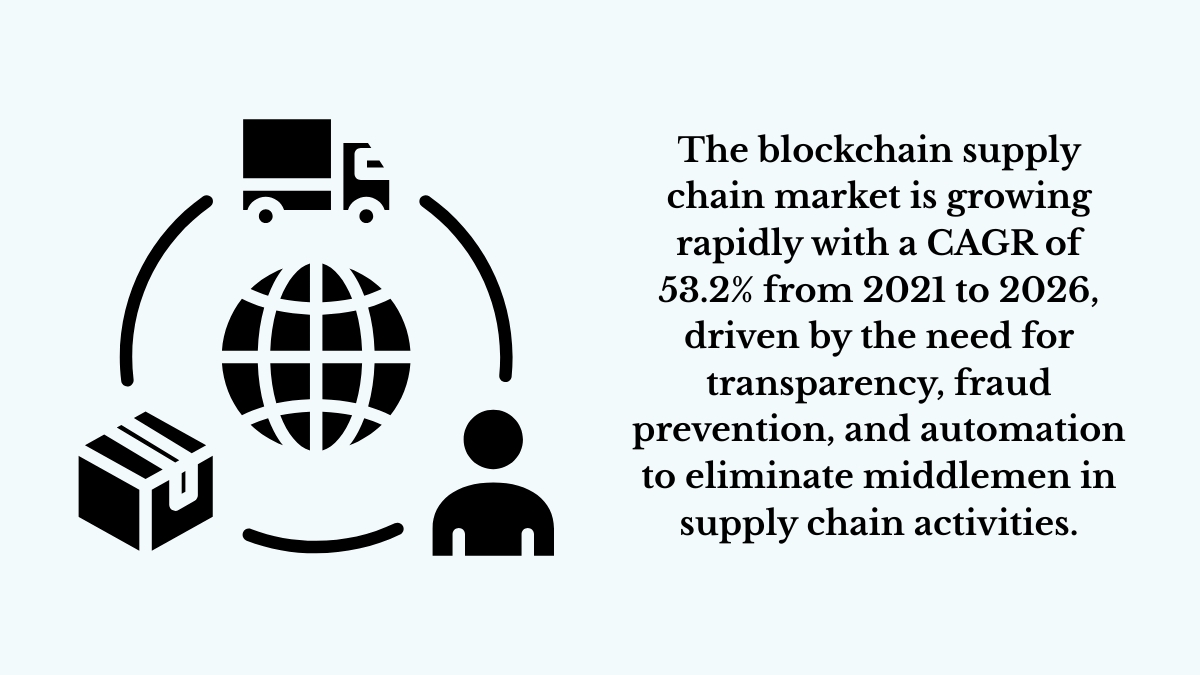
A huge 90.2% growth rate is expected for the global blockchain supply chain market from 2024 to 2030. This shows a big change in how we digitize supply chains1. It means blockchain is being adopted fast across many industries, changing how we manage supply chains.
In 2023, the global blockchain supply chain market was worth USD 2.26 billion. This is a big step in using blockchain in supply chain work1. It shows blockchain is seen as a way to make supply chains more open, safe, and efficient.
But, using blockchain also brings new challenges. A study found that blockchain might make default risk higher, mainly in companies with CEO duality and more power2. This shows we need to be careful and plan well when we add blockchain to supply chains.
The platform segment was the biggest in the blockchain supply chain market in 2023, making up 60.42% of global revenue1. This shows how important strong blockchain platforms are. They help make supply chain digitization smooth and encourage more industries to use blockchain.
Key Takeaways
- Global blockchain supply chain market expected to grow at 90.2% CAGR
- Market valued at USD 2.26 billion in 2023
- Platform segment led with 60.42% of global revenue
- Potential increase in default risk with blockchain adoption
- Careful implementation strategies needed for successful integration

Global Market Overview and Growth Projections
The blockchain supply chain market is growing fast. This is thanks to new ideas in supply chain management and more use of blockchain. In 2023, the market size hit USD 2.26 billion1. This big number shows how much people see blockchain’s value in making supply chains better.
Current Market Size and Valuation
The platform segment leads the market, making up 60.42% of global revenue in 20231. This big share shows how important platforms are in adding blockchain to supply chains. Middleware providers also have a big role, with the most market revenue in 20231.
CAGR Predictions Through 2030
The future looks bright for the blockchain supply chain market. Experts predict a 90.2% growth rate from 2024 to 20301. This shows how big of a change blockchain can make in supply chain management.
Key Market Drivers
Several things are pushing the market forward. The asset tracking segment is leading in revenue, showing how much people want better tracking in supply chains1. Smart contracts are also growing fast, helping more people use blockchain in supply chain work1. These trends show the focus on making supply chains more open, safe, and efficient.
| Segment | Market Position | Growth Projection |
|---|---|---|
| Platform | 60.42% of global revenue (2023) | Continued dominance |
| Services | Growing market share | Significant growth expected |
| Public Blockchain | Largest revenue share (2023) | Steady growth |
| Hybrid/Consortium | Emerging segment | Significant growth expected |

Supply Chain Blockchain Adoption Rates
Blockchain technology is becoming more popular in supply chains. The global market for blockchain in supply chains hit USD 2.26 billion in 2023. It’s expected to grow by 90.2% from 2024 to 20301.
A study of 130 North American firms showed big wins. They saw better labor productivity, faster operations, and more profits than those who didn’t use blockchain3.
Blockchain adoption rates differ in the market. In 2023, the platform segment made up 60.42% of the global revenue1. This shows more businesses are using blockchain platforms for their supply chains.
| Market Segment | 2023 Revenue Share | Growth Projection |
|---|---|---|
| Platform | 60.42% | Leading segment |
| Services | Not specified | Significant growth expected |
| Public Blockchain | Largest share | Continued dominance |
| Hybrid and Consortium | Not specified | Significant growth expected |
Blockchain adoption is promising, but its effects vary. It didn’t really change sales or customer likes3. The main benefits are in making operations more efficient and transparent, not in boosting sales.

Security Enhancements in Supply Chain Operations
Blockchain is changing how we keep supply chains safe. It helps with the growing need for sustainability in supply networks4. Businesses are finding new ways to protect data and fight cyber threats.
Cybersecurity Measures Implementation
Companies are spending more on strong cybersecurity. This move aims to stop fraud and data tampering. It’s expected that blockchain use will grow by 15% each year for the next five years5.
Walmart is a great example. They use blockchain to track food fast. This has cut down the time to find contamination sources from days to seconds6.
Data Breach Prevention Strategies
Security steps include encryption and multi-factor authentication. But, there are privacy worries. This has made blockchain more expensive, by 2.5 times4.
Yet, the benefits are worth it. Blockchain can cut supply chain costs by up to 30%6.
Real-time Monitoring Systems
Real-time monitoring is key for better supply chain management. It brings transparency, letting everyone see the same data6. This can lead to a 30% drop in logistics costs6.
| Security Enhancement | Impact |
|---|---|
| Blockchain Implementation | Up to 30% efficiency gains in logistics |
| Smart Contracts | 90% reduction in processing costs |
| Real-time Tracking | Significant enhancement in transparency |
Only 26% of global supply chain leaders have started blockchain projects5. But, the change it can bring is huge. As more see its value, we’ll see more use in the supply chain.

Transparency and Traceability Benefits
Blockchain is changing how businesses run their supply chains. It brings many benefits, like making things clear and easy to follow. Companies can now see where their products come from and who they meet along the way7.
Using blockchain makes supply chains more open and accurate. It helps spot mistakes and keeps everyone honest8. This openness helps build trust with everyone involved.
Blockchain is also great for stopping fake products and keeping things fair. It keeps a permanent record of every deal78. This is key for businesses that need to prove their products are real and made right.
| Benefit | Impact |
|---|---|
| Enhanced Transparency | Improved stakeholder trust and accountability |
| Increased Traceability | Faster issue resolution and recall management |
| Data Integrity | Reduced fraud and enhanced security |
| Process Efficiency | Streamlined operations and reduced costs |
The advantages of blockchain in supply chains are obvious. But, there are hurdles to overcome. Companies face tech challenges, fitting it into current systems, and changing rules8. Yet, starting small and picking the right blockchain can help succeed8.

Platform Segment Leadership in Blockchain Solutions
Blockchain technology is changing how we manage supply chains. The platform segment leads in blockchain solutions for supply chains. It makes up a big part of global revenue in recent years.
Market Share Analysis
The platform segment is the biggest in the blockchain market. This shows how much people want to improve supply chains. Over 90% of banks in the US and Europe are looking into blockchain projects.
This shows blockchain’s big role in making supply chains better. It makes them more transparent and efficient.
Platform Integration Benefits
Blockchain platforms bring big benefits to supply chain management. They create secure, shared records. This is great for industries with big, global supply chains.
Using blockchain solutions makes supply chains safer and more efficient. It cuts down on fraud and makes things run smoother.
| Benefit | Impact |
|---|---|
| Enhanced Transparency | Improved visibility across supply chain |
| Increased Security | Reduced fraud and data breaches |
| Operational Efficiency | Streamlined processes and reduced costs |
Real-time Tracking Capabilities
Real-time tracking is a big reason for using blockchain in supply chains. Platforms let companies track and verify transactions right away. This is very useful in food and pharmaceuticals, where knowing where products come from is key9.
Blockchain devices are also helping with real-time tracking. The wired blockchain devices segment will keep leading until 2026. This makes it easy to add blockchain to existing supply chain systems10.
This integration is key for businesses wanting to use blockchain fully in their supply chains.
Service Provider Ecosystem Development
The blockchain in supply chain market is growing fast. The services segment is set to grow even more. Companies are looking for experts to help with blockchain platforms.
The global blockchain supply chain market was worth $2.26 billion in 2023. It’s expected to grow by 90.2% from 2024 to 20301. This growth comes from more demand for managed services and technical consulting.
Companies are realizing they need to train their workers on blockchain. This is making the service provider ecosystem bigger. Businesses want to get better at supply chain management with expert help.
The services segment is expected to grow a lot in the future. This will help the platform segment, which made up 60.42% of global revenue in 20231. More companies will need specialized service providers for blockchain solutions.
We expect the blockchain supply chain market to keep growing. A strong ecosystem of service providers will offer custom solutions. This ecosystem will help drive innovation and make supply chains more efficient worldwide.

Public vs Private Blockchain Implementation
Blockchain technology is changing the supply chain world. It’s making operations more secure and open. Both public and private blockchains are key players in this change.
Public Blockchain Advantages
Public blockchains let everyone join and see everything. They help build trust with people and groups. But, they can get slow because of too many transactions11.
Hybrid Solutions Growth
Hybrid blockchains are becoming more popular. They mix openness with privacy, perfect for strict rules. Over 51% of companies are using or planning to use blockchain in their supply chains12.
Enterprise Adoption Patterns
Private blockchains are leading in supply chain use. More than 60% of companies choose them for better security and privacy12. They’re fast, making them great for big tasks in companies11.
About 30% of companies are using consortium blockchains. They help with teamwork and making things more efficient12. These blockchain solutions are good for working together in specific areas11.
| Blockchain Type | Adoption Rate | Key Advantage |
|---|---|---|
| Private | 60% | Enhanced security and privacy |
| Public | 20% | Transparency and trust-building |
| Consortium | 30% | Collaborative efficiency |

Middleware Solutions Impact
Middleware solutions are key in blockchain for supply chains. They connect different platforms for smooth data sharing. In 2023, the middleware provider segment got the biggest share of the market.
Middleware helps with real-time talks and makes blockchain work better. As supply chains get more complex, we need better middleware. This is true, as companies use more than one cloud.
Middleware has a big effect on making supply chains better. It helps blockchain work with old systems, a big challenge in going digital13. Middleware or APIs are vital for getting systems to work together. They help solve problems in using digital tech in supply chains.
| Middleware Solution Benefits | Impact on Supply Chain |
|---|---|
| Interoperability | Enables communication between different blockchain networks |
| Real-time data exchange | Enhances operational efficiency and decision-making |
| Multi-cloud management | Optimizes diverse infrastructures in supply chains |
| System integration | Facilitates smooth adoption of blockchain technology |
Using middleware is key to unlocking blockchain’s full power in supply chain management13. With digital tech adding $1.5 trillion to global supply chains by 2025, middleware will be essential.

Asset Tracking Applications and Growth
Blockchain is changing how we track assets in supply chains. The market is growing fast, reaching $2.08 billion in 202414. This shows how much people want more transparency and innovation in supply chains.
Industry-specific Implementation
Many sectors are using blockchain for better supply chain management. Industries like manufacturing, logistics, and finance are using it for tracking and smart contracts15. For example, PropertyClub uses it for real estate, and Torqata network is in American Tire Distributors’ supply chain.
ROI Analysis
Blockchain in supply chains is showing good returns. The market is expected to hit $9.77 billion by 2030, growing fast14. This is because companies are focusing on being more open, with 87% of them making it a top priority in 202314.
| Year | Market Value | Key Focus |
|---|---|---|
| 2024 | $2.08 billion | Asset Tracking |
| 2030 (Projected) | $9.77 billion | Supply Chain Visibility |
The fast growth shows blockchain’s big impact on supply chains. As more industries see the value of clear tracking, we’ll see more changes and use in this area.

Smart Contract Integration in Supply Chains
Smart contracts are changing how we manage supply chains. They are like self-running contracts that make things more efficient and clear. A study shows that 84% of companies are using blockchain technology16.
Smart contracts bring many benefits to supply chains:
- They make things more efficient by automating processes.
- They increase transparency and make it easier to track things.
- They help save money.
- They also help reduce risks.
Smart contracts create permanent records and allow for real-time tracking. This builds trust among partners17. They are key to making supply chains better and getting more people to use blockchain technology.
Smart contracts can really cut costs. They remove middlemen and make things run smoother. This helps businesses save money17. It’s part of a bigger trend to make supply chains more digital and cost-effective.
The future of smart contracts in supply chains looks bright. Experts say about 75% of companies will use blockchain in their supply chains by 202516. This will lead to more innovation in managing supply chains and help the blockchain market grow.
As blockchain technology adoption keeps growing, smart contracts will become even more important. They will help make supply chains more efficient, open, and safe. Using this technology is a big step towards making supply chains more digital.

AI and Blockchain Convergence
The mix of artificial intelligence (AI) and blockchain is changing supply chains. This combo makes supply chain management more efficient and secure.
Integration Benefits
AI and blockchain together offer big benefits for supply chains. The market for AI in blockchain is expected to hit $3718.34 million by 203318. This shows how much businesses value AI and blockchain working together.
Some key benefits are:
- Enhanced data analytics
- Improved machine learning
- More trust in supply chain deals
More than 51% of companies plan to use AI and blockchain by the end of the year18.
Operational Efficiency Improvements
AI and blockchain together make supply chains work better. By 2025, 80% of companies will use AI and blockchain for smart automation18. This is true for healthcare and finance too19.
AI in blockchain is great for:
- Predictive demand forecasting
- Real-time inventory management
- Spotting problems early
Tools like Circulor and IBM Chain are helping in complex supply chains. They make working together better and increase efficiency.

Small Business Adoption Trends
Small businesses are now using blockchain technology in their supply chains. By 2024, 10% of global businesses adopted blockchain, showing a rise in small businesses using it20. They want to work better and stay ahead of the competition.
Cost Considerations
Cost is a big deal for small businesses thinking about blockchain. But the benefits are worth it. Banks could save up to $11.2 billion a year with blockchain, which catches the eye of small business owners21.
| Cost Factor | Impact on Small Businesses |
|---|---|
| Initial Investment | High upfront costs, but could save money in the long run |
| Operational Expenses | Could go down as work gets more efficient |
| Training and Skill Development | Needs investment for success |
Implementation Challenges
Small businesses face challenges when using blockchain. In 2020, only 45% of small businesses used data analytics, showing a need for better tech20. The end of TradeLens, a blockchain project by IBM and Maersk, shows how important it is to get everyone on board22.
New tools are coming to help. Assisterr and ChainGPT are making blockchain easier for small businesses to use20. With the blockchain market expected to hit $67.4 billion by 2026, small businesses are ready to grow21.

Future Market Predictions
The future of blockchain in supply chain looks bright. By 2030, the global blockchain market is expected to hit $36,251.7 million23. This growth shows a big change in how supply chains work, with more businesses using blockchain to improve their operations.
Blockchain technology is changing how we manage supply chains. It makes transactions clear and helps track goods better, making operations safer and more reliable across all industries23. As more companies see these benefits, we’ll see blockchain used more widely. This will make supply chains better all over the world.
More companies are starting to use blockchain in their supply chains23. This is because blockchain makes things run smoother and cuts out middlemen. In the next few years, we expect to see a big jump in blockchain use. This will be in areas like smart contracts, payment systems, and digital identity management24.
As blockchain keeps showing its value in making supply chains better, we think it will team up with other new tech. This mix will bring even more creative solutions. It will change the supply chain world even more, making trade safer, more open, and efficient.
Conclusion
Blockchain technology is changing the supply chain world. By 2023, we’ll spend $6.6 billion on blockchain solutions, with a big part for supply chains25. This shows how much people see blockchain’s value in making supply chains safer, clearer, and faster.
More and more companies are using blockchain, with 53% seeing it as key for their supply chain plans25. The World Economic Forum says blockchain could add $365 billion to the global supply chain by 203025. The blockchain supply chain market is expected to hit $6.31 billion by 2029, growing fast2526.
Most people trust blockchain to make supply chains more open26. Soon, 58% of businesses think blockchain will change supply chain management in a few years26. But, only 6% of supply chain managers want to use blockchain more, showing there’s a lot to learn26.
In short, blockchain is making a big difference in supply chains. As more companies use it, we’ll see even more changes. The future of supply chain management is all about using new tech to make trade safer, faster, and clearer.
References:
- Blockchain Supply Chain Market Size & Share Report, 2030 – https://www.grandviewresearch.com/industry-analysis/blockchain-supply-chain-market-report
- Opportunity or opportunism? Blockchain technology adoption and corporate default risk – Humanities and Social Sciences Communications – https://www.nature.com/articles/s41599-024-03727-6
- Blockchain adoption and operational performance: A secondary data analysis on effects and contingencies – https://www.emerald.com/insight/content/doi/10.1108/ijopm-05-2023-0346/full/html
- Blockchain-Based Security Factors on Sustainable Supply Chain Management in UK Manufacturing Firms: A Hybrid SEM-ANN Approach – https://www.mdpi.com/2079-8954/12/6/208
- How Blockchain is Transforming Global Supply Chains – https://www.sdcexec.com/software-technology/emerging-technologies/article/22888075/aventus-how-blockchain-is-transforming-global-supply-chains
- Blockchain in Logistics: Enhancing Transparency and Efficiency – https://disk.com/resources/blockchain-in-logistics-enhancing-transparency/
- How Blockchain Technology Is Transforming Supply Chain Transparency – https://www.sekologistics.com/en/resource-hub/knowledge-hub/how-blockchain-technology-is-transforming-supply-chain-transparency/
- Blockchain: A Catalyst for Transparency in Supply Chains – https://www.linkedin.com/pulse/blockchain-catalyst-transparency-supply-chains-rafael-a-vela-leeqe
- Blockchain Technology Market | Size, Share, Growth | 2024 – 2030 – https://virtuemarketresearch.com/report/blockchain-technology-market
- Blockchain Devices Market Growth,Analysis, Challenges and Emerging Opportunities | Exactitude Consultancy – https://www.globenewswire.com/news-release/2024/12/04/2991322/0/en/Blockchain-Devices-Market-Growth-Analysis-Challenges-and-Emerging-Opportunities-Exactitude-Consultancy.html
- Public vs Private Blockchain: Choosing the Best Solution for Your Business – https://blaize.tech/blog/public-vs-private-blockchains/
- Public vs Private Blockchain: Understanding the Differences – https://www.rapidinnovation.io/post/difference-between-public-and-private-blockchain
- Digitalization of Supply Chain & its Impact on Performance (2024) – Neuroject – https://neuroject.com/digitalization-of-supply-chain/
- Blockchain for Supply Chain Management: [Benefits & Use Cases] – https://acropolium.com/blog/why-and-how-to-employ-blockchain-in-supply-chain-management-tips-and-success-stories/
- Blockchain in Asset Management: 2024 Overview & Use Cases – https://ventionteams.com/blog/blockchain-asset-management
- Integrating Blockchain Technology for Enhanced Supply Chain Transparency – https://vorecol.com/blogs/blog-integrating-blockchain-technology-for-enhanced-supply-chain-transparency-173777
- Smart Contracts in Supply Chain: Benefits, Use Cases, and Examples – https://www.rapidinnovation.io/post/smart-contracts-in-supply-chain-management-enhancing-transparency-and-efficiency
- AI with Blockchain: Use Cases, Benefits and Emerging Trends – https://www.a3logics.com/blog/ai-with-blockchain/
- AI and Blockchain Disruption: Unveiling Perfect Synergy Use Cases – https://onchain.org/research/ai-and-blockchain-disruption/
- How Blockchain And AI Are Set To Transform Small Businesses In 2024 – https://www.forbes.com/sites/digital-assets/2024/01/24/how-blockchain-and-ai-are-set-to-transform-small-businesses-in-2024/
- Blockchain Statistics 2024 By New Ledger, Technology… – https://scoop.market.us/blockchain-statistics/
- A Critical Literature Review on Blockchain Technology Adoption in Supply Chains – https://www.mdpi.com/2071-1050/16/12/5174
- How Big will be Blockchain Market in 2030? – https://www.linkedin.com/pulse/how-big-blockchain-market-2030-101blockchains-gla3e
- Blockchain Market- By Type , By End Users , By Deployment type , By Organization Size , By Geography – Global Opportunity Analysis & Industry Forecast, 2024-2030 – https://www.industryarc.com/Report/17949/blockchain-market.html
- Ensuring Resilience with Blockchain in Supply Chain – https://www.xcubelabs.com/blog/ensuring-supply-chain-resilience-with-blockchain-technology/
- Blockchain in Supply Chain: Use Cases, Benefits and Challenges – https://www.a3logics.com/blog/blockchain-in-supply-chain/

This Article is Reviewed and Fact Checked by Ann Sarah Mathews
Ann Sarah Mathews is a Key Account Manager and Training Consultant at Rcademy, with a strong background in financial operations, academic administration, and client management. She writes on topics such as finance fundamentals, education workflows, and process optimization, drawing from her experience at organizations like RBS, Edmatters, and Rcademy.

